Quill Making
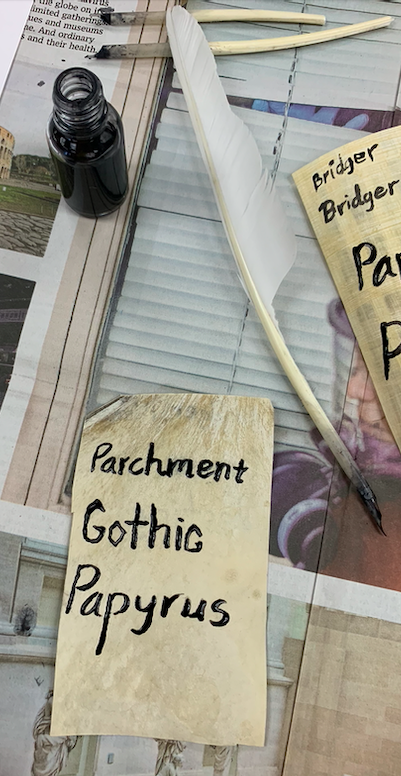
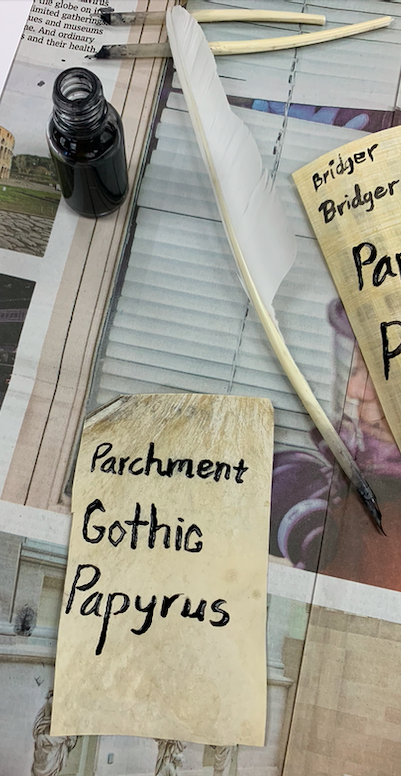
I thought that making quill pens was very interesting. Additionally, I appreciated the fact that we were given the opportunity to create additional quill pens after we attempted to use our original pens. I made two pens, which can be seen as the top two pens in the picture to the right. These two quills were slightly different, but equally awful at writing. Neither of these quills could write more than three or four letters without needing to be re-dipped and they both had a tendency to sporadically release large globs of ink which made writing —God forbid reading— quite difficult. After experiencing these issues, I made a new quill. For this quill, I focused on creating a true nib at the end and making a nice well for the ink. I also left some feathers on it because I like the Harry Potter vibe. The result was a quill that I had far more control over and which could write well on parchment, papyrus, or modern paper. The previous quills had had some trouble writing smoothly on the papyrus. Additionally, when I decided to test how long the new quill could write, it got through the words “length test, goose feather quill, longer than expected” before needing more ink. That was a vast improvement over the three to five letters which the previous two quills could achieve. Using my third, far superior quill made medieval and early-modern scribes’ jobs seem much easier. Imagining writing some massive book and re-inking your quill every three letters made it seem incredible that any book was ever finished, but it seemed much more doable with a quill that could feasibly achieve a line or two on one tank of ink.

Leave a Reply